
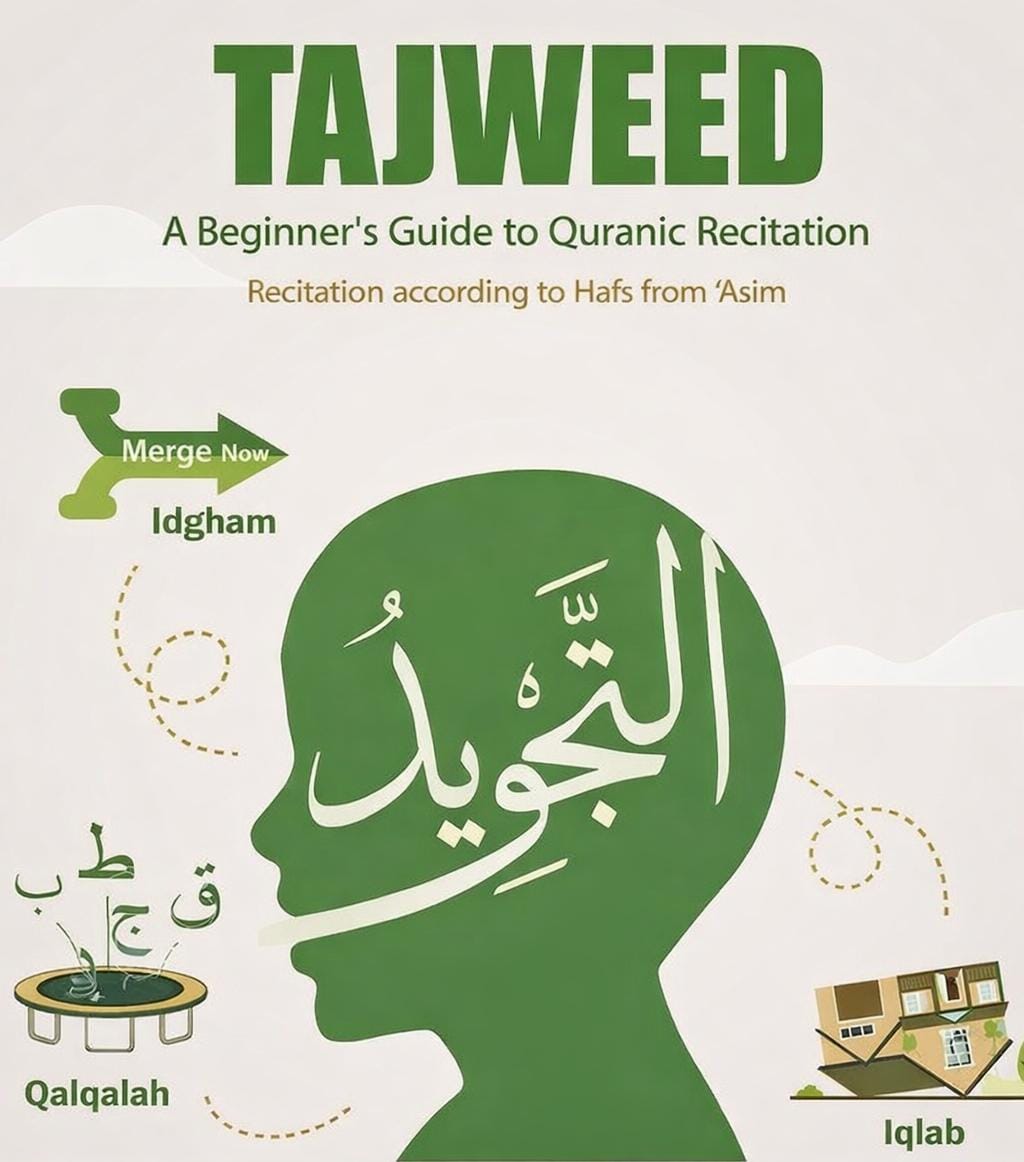
When many students begin learning the Quran online, they focus first on finishing pages, memorizing quickly, or simply sounding more fluent. Those goals are understandable, but they can hide an important truth: fluency without correct recitation is incomplete. Tajweed matters because it protects the words of Allah from distortion and trains the tongue to give each letter its due right.
Allah says in Surat Al-Muzzammil to recite the Quran with measured recitation. Scholars have long understood from this that the Quran should not be rushed or handled carelessly. Tajweed helps turn that command into a real practice. It teaches the student where to slow down, how to pronounce letters from their proper articulation points, and how to avoid mistakes that change meaning.
Tajweed Preserves Accuracy
Arabic contains letters that can sound similar to a new learner. Without Tajweed, mistakes can become habits, and habits become difficult to remove later. A student who repeatedly confuses letters, shortens what should be lengthened, or ignores clear articulation may still feel confident, but confidence without correction can lead to weak foundations.
This is why online Quran classes should include live listening and live correction. A qualified teacher hears what the student does not hear in their own recitation. Over time, the student becomes more sensitive to sound and develops stronger self-correction.
Tajweed Increases Respect for the Quran
There is also a spiritual side to Tajweed. When a Muslim learns to recite carefully, it reflects respect for revelation. We do not handle ordinary speech with the same attention we give to the Quran. The effort itself is meaningful. Even if a learner is still at a beginner level, trying to improve pronunciation is part of honoring the book of Allah.
This mindset is especially important for children. If Tajweed is presented only as a difficult set of rules, children may become discouraged. But if it is taught as a beautiful way to read the Quran properly, it becomes motivating. Students start to see Tajweed as a path to excellence, not merely a correction system.
Online Learning Can Be Excellent for Tajweed
Some parents and adult learners wonder whether Tajweed can really be taught well online. The answer is yes, if the lessons are structured properly. One-to-one online Quran classes offer several advantages: the teacher can focus on one voice at a time, correct repeated errors immediately, and assign personal revision. Students can also review recordings or repeat patterns more intentionally in their own practice time.
What matters most is not the physical classroom. It is the quality of listening, consistency of feedback, and regularity of revision. A disciplined online Tajweed program can produce very strong results when the student is sincere and the teacher is attentive.
Tajweed Builds Confidence
Many learners feel shy when reciting aloud, especially adults returning to Quran study after years away. Tajweed helps because it gives structure. Instead of guessing, the student learns rules and patterns. Instead of vague embarrassment, they gain clear steps for improvement. Over time, correct recitation produces a healthy kind of confidence: not pride, but reassurance that the Quran is being read more accurately than before.
Tajweed is not about showing off. It is about worship, discipline, and safeguarding the recitation of the Quran. For that reason, it should be part of serious online Quran learning from the beginning, even if introduced gradually. A strong foundation in Tajweed saves a student from many future mistakes and helps the heart approach the Quran with more care and presence.